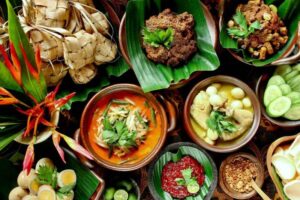

Indonesia is a country rich in cultural diversity, and nowhere is this more evident than in its culinary traditions. From the spicy sambals of Sumatra to the sweet desserts of Java, each region has its own unique flavors and dishes that reflect its history and heritage. Among the many iconic foods from Indonesia, two stand out for their distinct taste and deep-rooted traditions: Rujak Cingur and Lontong Balap. Both are street foods that have become symbols of Surabaya’s vibrant food culture.
What is Lontong Balap?
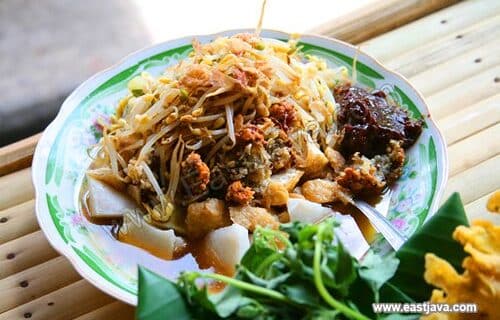
Lontong Balap is a traditional dish from Surabaya, Jawa Timur. The name itself is intriguing — “lontong” refers to compressed rice cakes, while “balap” means race. This name originates from the way vendors used to carry their ingredients on large clay pots (kemaron) and race through the streets to reach their selling spots before other vendors. Over time, the term “balap” came to symbolize the competitive spirit of these street sellers.
Key Ingredients of Lontong Balap
- Lontong: Compressed rice cakes that form the base of the dish.
- Tauge: Bean sprouts, which add a crisp texture.
- Tahu goreng: Fried tofu, providing a savory element.
- Lentho: A type of fried dough, similar to fritters.
- Bawang goreng: Crispy fried onions, adding a nutty flavor.
- Kecap: Sweet soy sauce, used as a condiment.
- Sambal: Spicy chili paste, often made with petis (shrimp paste).
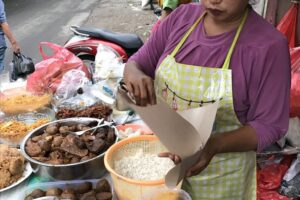
The dish is typically served in a bowl and enjoyed with a variety of toppings. While the original version was sold by vendors who would run through the streets, today it’s commonly found in small stalls or on carts, still carrying the same essence of Surabaya’s street food culture.
What is Rujak Cingur?
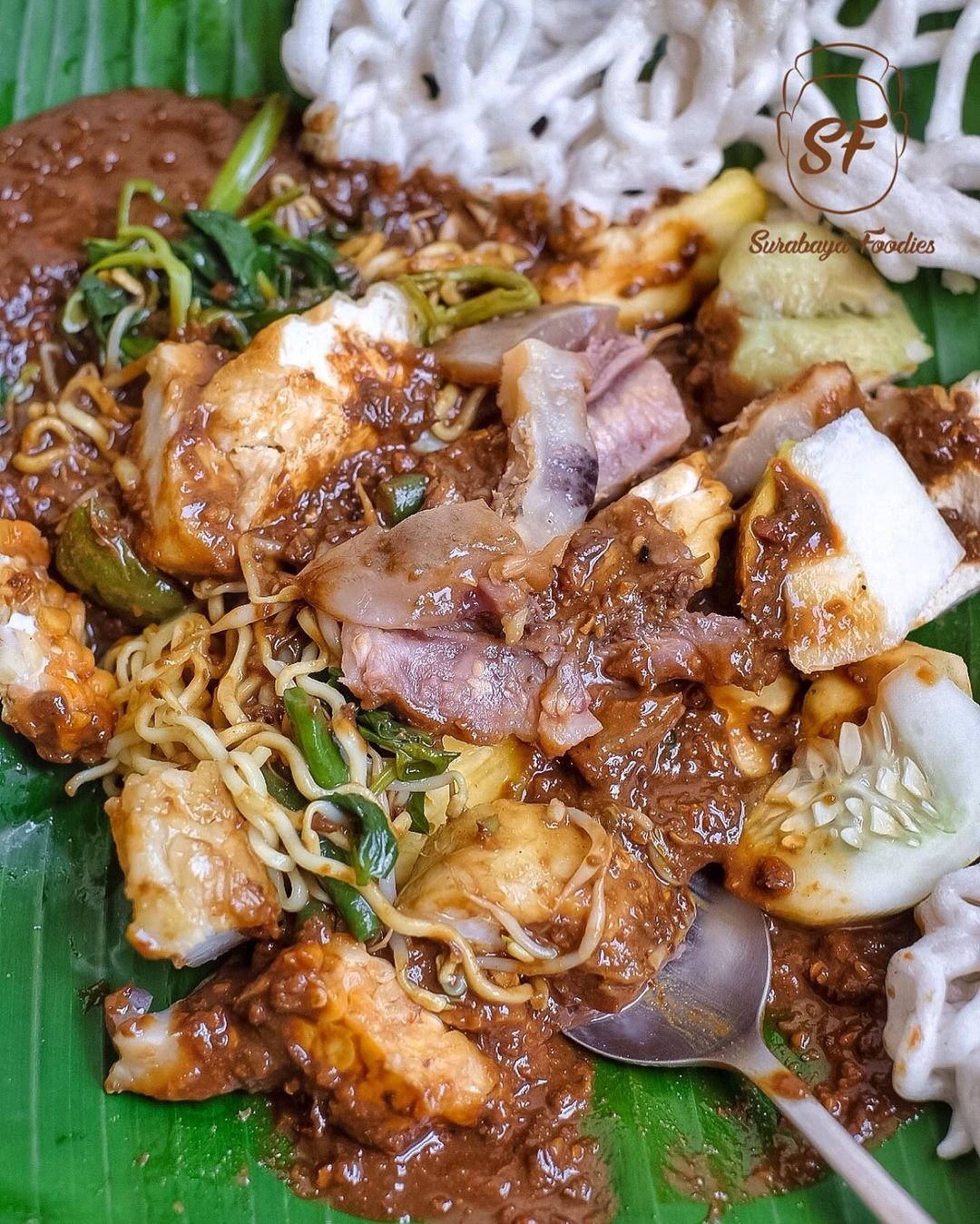
Rujak Cingur is another beloved dish from Surabaya, known for its bold flavors and colorful presentation. The name “rujak” refers to a type of salad, while “cingur” means the snout or muzzle of a cow, which is a key ingredient in this dish. Despite its unassuming appearance, Rujak Cingur is a complex blend of sweet, sour, spicy, and salty flavors.
Key Ingredients of Rujak Cingur
- Buah-buahan: Such as kedondong (starfruit), mangga muda (unripe mango), nanas (pineapple), belimbing (star fruit), bengkuang (water chestnut), and mentimun krai (a type of cucumber).
- Sayuran: Including kangkung (water spinach), kacang panjang (long beans), and kecambah (bean sprouts).
- Tahu dan tempe: Fried tofu and tempeh, adding a protein-rich element.
- Cingur: The cow’s snout, which is boiled and sliced, giving the dish its signature texture.
- Kerupuk: Crispy crackers, often made from shrimp or fish.
- Petis udang: Shrimp paste, which forms the base of the sauce.
The dish is traditionally served on a banana leaf, emphasizing its connection to local traditions and simplicity.
The Cultural Significance of These Dishes
Both Rujak Cingur and Lontong Balap are more than just meals; they are reflections of Surabaya’s history and community spirit. Lontong Balap, for instance, originated from the bustling markets of Surabaya, where vendors would compete to attract customers. This competition gave rise to the name “balap,” meaning race, and became a part of the city’s identity.
Similarly, Rujak Cingur has deep roots in the local culture. It is believed to have been introduced by Madurese migrants in the 1930s, who adapted their traditional recipe to suit the tastes of Surabaya’s Javanese population. Over time, it evolved into a dish that represents the fusion of different regional influences.
How to Enjoy These Dishes
For first-time visitors, both dishes may seem overwhelming due to their bold flavors and unconventional ingredients. However, once you take a bite, you’ll understand why they are so popular. Here are some tips:
- Start with small portions: To get a sense of the various flavors.
- Pair with kerupuk: The crispy crackers complement the dish well.
- Dip in the sauce: The petis-based sauce adds depth and complexity to every bite.
Conclusion
Rujak Cingur and Lontong Balap are more than just street food — they are culinary treasures that tell the story of Surabaya’s past and present. Whether you’re a local or a tourist, trying these dishes is a must when visiting the city. They offer a unique taste experience that is both challenging and rewarding, making them an essential part of Indonesia’s diverse food landscape.